
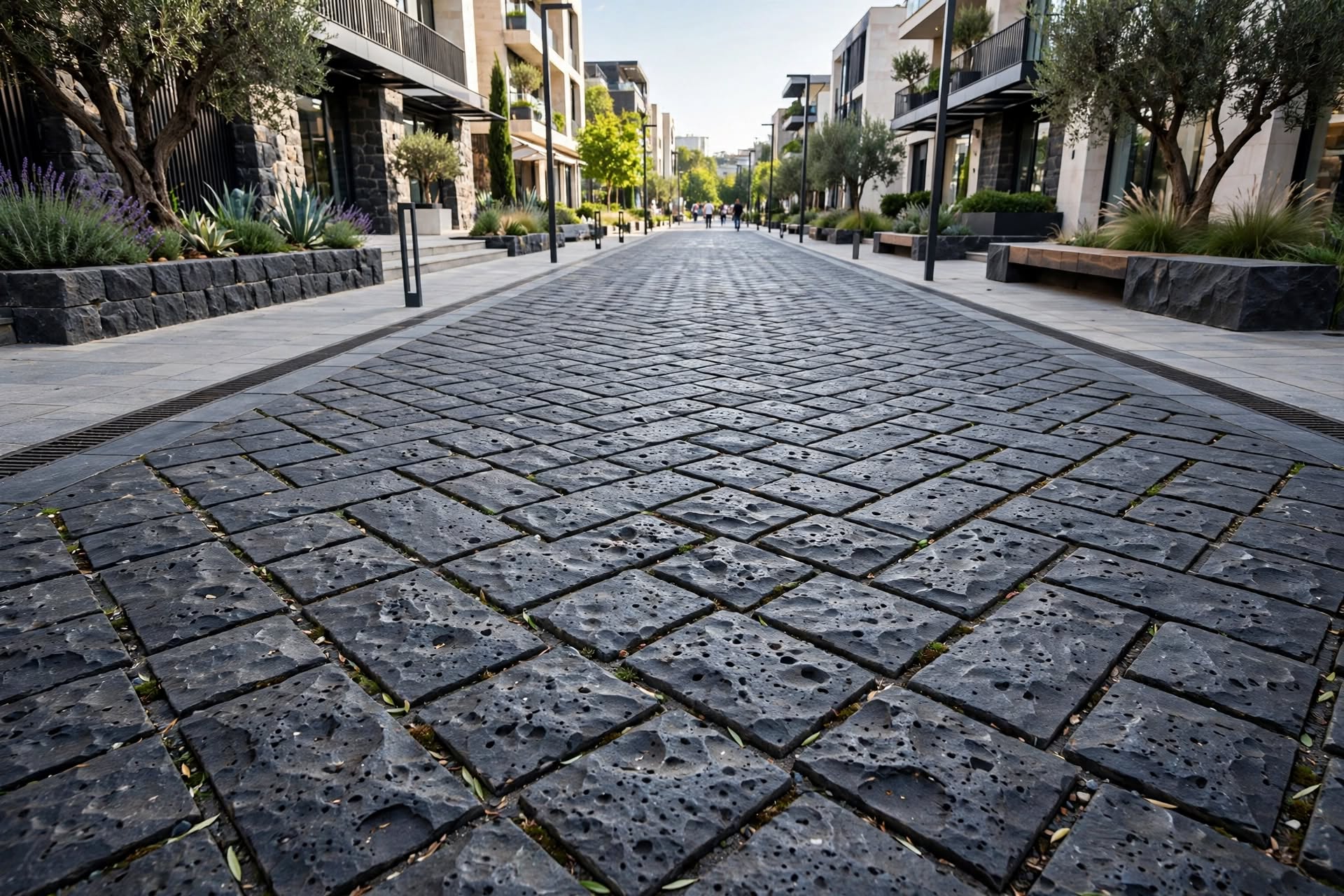
Basalt stone is one of the most versatile natural stones used in modern architecture, construction, and landscape design. Recognized for its distinctive dark grey to black appearance, dense structure, and excellent durability, basalt offers a combination of natural beauty and practical performance.
From contemporary building façades and outdoor paving to interior flooring, stairs, and landscaping, natural basalt stone provides architects and designers with a timeless material suitable for a wide range of residential, commercial, and public projects.
In this guide, Dragon Marble explores what basalt stone is, its key characteristics, common applications, available finishes, and the factors to consider when selecting basalt for your next project.
What Is Basalt Stone?
Basalt is a natural volcanic igneous rock formed when lava cools relatively quickly at or near the Earth’s surface. This cooling process creates a fine-grained, compact structure that gives basalt its characteristic appearance and physical properties.
Typically available in shades of dark grey, charcoal, and black, basalt stone is valued for its understated elegance and ability to complement contemporary architectural styles.
Unlike decorative materials that focus primarily on appearance, basalt combines a distinctive natural aesthetic with durability, making it a popular choice for both interior and exterior applications.
Key Properties and Characteristics of Basalt Stone
Understanding the properties of basalt is essential when choosing the right natural stone for an architectural or construction project.
1. High Durability
Basalt is a dense volcanic stone known for its resistance to everyday wear and abrasion. When properly selected, processed, and installed, it can perform well in areas exposed to frequent pedestrian traffic and demanding environmental conditions.
2. Low Water Absorption
Many dense basalt varieties have relatively low water absorption. This characteristic makes them suitable for various exterior applications, although actual performance depends on the specific stone and its technical test results.
3. Weather and Frost Resistance
Selected basalt products can withstand challenging outdoor conditions, including temperature variations and freeze-thaw cycles. The appropriate technical specifications should always be checked before selecting basalt for outdoor projects.
4. Distinctive Natural Appearance
Basalt is particularly appreciated for its dark and sophisticated colour palette. Its grey and black tones create a refined architectural appearance and work beautifully with glass, metal, concrete, wood, and other natural stones.
5. Versatile Surface Finishes
Basalt can be processed using different finishing techniques to achieve smooth, textured, or naturally rugged surfaces. The selected finish influences its appearance, maintenance requirements, and suitability for different applications.
Common Applications of Basalt Stone
Thanks to its physical characteristics and contemporary appearance, basalt is used in a variety of architectural and landscaping projects.
Basalt Stone for Outdoor Paving
Basalt paving is widely used in outdoor spaces where durability and visual consistency are important.
Common applications include:
-
Public squares and pedestrian walkways.
-
Garden pathways and outdoor terraces.
-
Driveways and selected vehicle-access areas.
-
Commercial outdoor spaces.
-
Courtyards and landscape projects.
Textured finishes, such as bush-hammered and sandblasted surfaces, can help improve traction when appropriately specified.
Basalt Stone for Building Facades
Basalt wall cladding creates a bold and sophisticated architectural appearance. Its dark tones complement modern building designs and can be combined with glass, aluminium, concrete, and other façade materials.
It is commonly considered for:
-
Commercial building façades.
-
Residential exterior walls.
-
Entrance features and architectural details.
-
Building bases and exterior wall cladding.
The thickness, fixing system, stone weight, and mechanical properties must be evaluated according to the façade design.
Basalt Flooring
Basalt flooring offers a clean, contemporary look for residential and commercial interiors.
It can be considered for:
-
Living rooms and entrance areas.
-
Hotel lobbies and reception spaces.
-
Commercial buildings.
-
Offices and showrooms.
-
Interior corridors and circulation areas.
The choice between honed, polished, or textured finishes should depend on the intended use and maintenance requirements.
Basalt Stairs and Steps
Basalt is also used for interior and exterior staircases, steps, and entrance areas. Its natural dark colour creates a strong visual contrast with lighter architectural materials.
For stair applications, the stone thickness, edge profile, installation method, and slip resistance should be carefully specified.
Basalt in Landscape Architecture
Landscape architects use basalt to create visually consistent outdoor environments.
Popular applications include:
-
Garden borders and retaining walls.
-
Landscape steps.
-
Decorative paving.
-
Outdoor seating areas.
-
Pathways and public landscaping.
-
Architectural landscape features.
Popular Basalt Stone Finishes
The surface finish has a major impact on the appearance and functionality of basalt stone.
Honed Basalt
A smooth, matte finish that creates a clean and contemporary appearance. It is commonly considered for interior flooring and wall applications.
Polished Basalt
A smooth, reflective surface that emphasizes the stone’s dark colour and creates a more sophisticated appearance. Suitability depends on the specific stone and intended application.
Flamed Basalt
A textured finish produced through thermal treatment. Its suitability varies by basalt type and processing characteristics, so it should be confirmed with the manufacturer.
Bush-Hammered Basalt
A textured surface created mechanically. It is frequently considered for exterior paving and applications where additional surface texture is required.
Sandblasted Basalt
A uniformly textured finish that provides a more natural, understated appearance and can be suitable for selected outdoor flooring applications.
Split-Face Basalt
A naturally rugged surface that highlights the stone’s original texture, often used for decorative walls and architectural cladding.
Advantages of Using Basalt Stone in Construction
Choosing basalt can provide several advantages for construction and architectural projects:
-
Long-lasting performance: Dense basalt varieties can offer excellent resistance to wear.
-
Contemporary aesthetics: Dark natural tones complement modern architectural designs.
-
Design flexibility: Available in different finishes, dimensions, and product formats.
-
Indoor and outdoor applications: Selected varieties can be used across different project environments.
-
Natural material: Basalt is a geological material that provides an alternative to manufactured decorative surfaces.
-
Architectural versatility: It can be combined with marble, granite, limestone, concrete, glass, and metal.
How to Choose the Right Basalt Stone for Your Project
Selecting basalt should involve more than choosing a colour or surface finish. Architects, contractors, and project developers should consider the following factors:
-
Application: Determine whether the stone will be used for flooring, paving, cladding, stairs, or landscaping.
-
Technical specifications: Review density, water absorption, flexural strength, compressive strength, and abrasion resistance where relevant.
-
Surface finish: Select a finish appropriate for the expected traffic, exposure, and slip-resistance requirements.
-
Thickness and dimensions: Ensure the stone dimensions meet the structural and installation requirements.
-
Colour consistency: Review samples and, where possible, the actual production batch.
-
Installation requirements: Consider fixing systems, substrate preparation, joints, drainage, and maintenance.
-
Project quantity and availability: Confirm the required volume, production lead time, packaging, and delivery arrangements.
For large-scale projects, requesting a representative sample and technical data sheet before confirming an order is highly recommended.
Basalt Stone vs. Marble: What Is the Difference?
Basalt and marble are both natural stones, but they have different geological origins, appearances, and typical applications.
Basalt is a volcanic igneous rock, generally recognized by its dark grey or black colour and fine-grained texture.
Marble is a metamorphic rock, often characterized by distinctive veins, varied colours, and a more decorative appearance.
Basalt is frequently selected for contemporary exterior paving, architectural cladding, and projects requiring a darker, more uniform aesthetic. Marble is often preferred for luxury interiors, decorative flooring, countertops, and architectural features where natural veining is an important design element.
The best choice depends on the project’s design, technical requirements, budget, and intended use.
Why Choose Dragon Marble for Your Natural Stone Projects?
At Dragon Marble, we believe that selecting natural stone is an important part of creating architectural spaces that combine quality, functionality, and timeless design.
Whether you are an architect, contractor, property developer, or stone importer, understanding the characteristics and technical requirements of each material is essential to achieving the right project outcome.
Our approach focuses on helping clients explore natural stone solutions that match their project requirements, design vision, and specifications.
Contact Dragon Marble to discuss your natural stone requirements, explore suitable material options, and request information for your upcoming project.
Frequently Asked Questions About Basalt Stone
What is basalt stone used for?
Basalt stone is used for outdoor paving, building façades, interior flooring, stairs, landscaping, wall cladding, and selected architectural applications.
Is basalt a natural stone?
Yes. Basalt is a natural volcanic igneous rock formed when lava cools at or near the Earth’s surface.
Is basalt stone suitable for outdoor use?
Many dense basalt varieties are suitable for outdoor applications, including paving and wall cladding. Their suitability depends on water absorption, frost resistance, surface finish, and technical test results.
Is basalt stone waterproof?
No natural basalt should automatically be considered completely waterproof. Many dense varieties have low water absorption, but the actual performance depends on the specific material.
Is basalt stone slippery?
Slip resistance depends largely on the surface finish, installation conditions, and whether the stone is wet or dry. Textured finishes are often considered for outdoor and wet areas, but appropriate slip-resistance testing is recommended.
What colours does basalt stone come in?
Basalt is most commonly found in dark grey, charcoal, and black tones. Some varieties may show subtle colour and texture variations.
What is the difference between polished and honed basalt?
Polished basalt has a smoother, reflective appearance, while honed basalt has a smooth, matte surface with little or no shine.
Is basalt better than marble?
Neither material is universally better. Basalt is often chosen for dark contemporary designs and selected exterior applications, while marble is popular for decorative and luxury architectural projects. The correct choice depends on the intended application and technical requirements.
How do you maintain basalt stone?
Regular cleaning with a suitable pH-neutral stone cleaner and non-abrasive tools is generally recommended. Avoid harsh chemicals unless their compatibility with the specific stone has been confirmed.
How can I request basalt stone for a construction project?
Contact Dragon Marble with your project location, required quantity, dimensions, preferred finish, and intended application to discuss suitable material options and availability.
Dragon Marble – Natural Stone Solutions for Modern Architecture
Leave a Comment